
DIAGNOSIS BEFORE PRESCRIPTION
A Problem-Led Approach to Technology Adoption in Hospitality


Technology, and artificial intelligence in particular, is developing at a pace that is difficult to ignore. New tools promise to save time, improve workflows, reduce costs and create new revenue opportunities. For hospitality organisations, there are good reasons to pay attention.
However, the speed of development also creates pressure to act. Every month brings another supposedly transformative platform, impressive demonstration or example of a company finding a profitable new use for AI. Vendors contribute to the momentum, while senior leaders understandably want reassurance that their organisations are keeping pace.
The risk is that technology adoption begins with the wrong question.
Instead of asking, “What problem do we need to solve?”, organisations can find themselves asking, “What can this new technology do?” The business case is then developed around the available solution, rather than the solution being selected in response to a clearly defined operational need.
Sometimes the investment delivers the anticipated results. In other cases, the technology does not suit the business model, is used at only a fraction of its potential or creates additional work for the people expected to use it. It may then be retained because it could become more useful in the future, or quietly written off as attention shifts towards the next promising development.
Hospitality has experienced versions of this cycle before, from service robots and blockchain applications to earlier generations of chatbots. There is little reason to assume that every AI implementation will automatically produce a different outcome.
Starting with the working day
This led us to consider a more deliberate approach, beginning with the operation itself rather than the latest technology available.
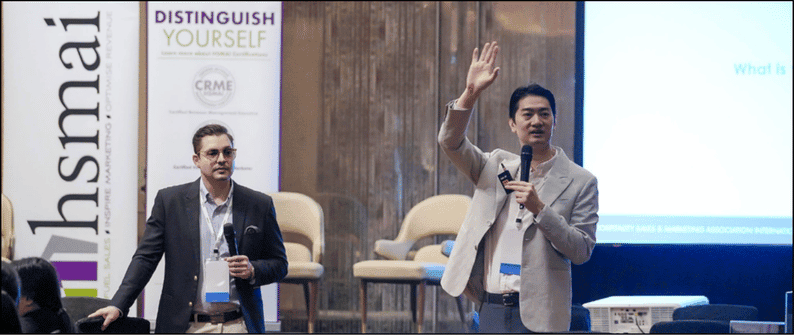
Earlier this year, we explored this idea through a workshop with senior commercial leaders at the 2026 HSMAI Commercial Strategy Conference in Singapore. Technology was deliberately left out of the initial discussion. Instead, participants were asked to examine their own working days and identify the tasks that consumed their time, the activities they considered valuable and the areas that caused frustration.
They then classified their tasks into three categories:
- High-value work that depended on their particular knowledge, judgement or relationships
- Necessary but draining work that was repetitive or unnecessarily time-consuming
- Low-value or unnecessary work with no clearly identifiable benefit
The exercise revealed an important distinction. Not every frustrating task needed to be automated. Some tasks could be delegated, reduced or removed altogether. Only after these possibilities had been considered did the discussion turn towards whether technology might provide the most appropriate solution.
Applying the 4D filter
To move from diagnosis to action, participants assessed the necessary but draining and unnecessary tasks using four possible responses:
- Delete the task if it no longer serves a worthwhile purpose
- Delegate it if it can be handled more appropriately elsewhere
- Digitize it if technology could complete or improve it
- Diminish it by reducing its frequency, scope or complexity
The observations from the workshop were indicative rather than formal research findings. Nevertheless, the exercise demonstrated how quickly a structured discussion could reveal tasks that participants believed were draining their capacity or no longer providing meaningful value.
It also showed why technology should not automatically be the first response. Deleting an unnecessary report, reducing the frequency of a meeting or simplifying an approval process may create immediate benefits without requiring another platform, subscription or implementation programme.
For the tasks that do warrant digitisation, the organisation begins the search with a much clearer brief. The team understands the problem, where it occurs in the workflow and what a successful solution must achieve. This makes it easier to assess potential tools and vendors based on operational requirements rather than impressive features alone.
Protecting the work that matters
A problem-led approach also helps organisations identify where technology may not be appropriate.
During the workshop, many of the activities considered most valuable involved personal relationships, professional judgement and complex problem-solving. These tasks may be supported by technology, but their value often depends on the experience and human qualities of the person performing them.
The goal of technology adoption should therefore not simply be to automate as much work as possible. It should be to reduce the burden of low-value and repetitive activities so employees have more time for the work in which they make the greatest contribution.
Making more deliberate decisions
Hospitality organisations cannot, and should not, ignore the opportunities created by AI and other emerging technologies. Standing still carries risks of its own. However, moving quickly does not have to mean purchasing every promising new solution.
Before evaluating a tool, leaders should be able to explain precisely what problem it will solve, where that problem sits within the working day and what improvement they expect to achieve.
In other words, focus on the specific issues you want to fix and not what the latest technology proports to be able fixing.
Our new white paper, Diagnosis Before Prescription: A Problem-Led Method for AI Adoption in the Hospitality Industry, explores this approach in more detail and provides a practical five-step method that hospitality teams can apply within their own organisations.
DOWNLOAD THE FULL WHITEPAPER